

The world of engineering is currently undergoing a massive shift. We are moving away from manual, time-consuming processes toward a more streamlined, automated future. At the heart of this change is robotics.
While many people imagine robots as humanoid figures from science fiction, the reality is far more practical. In the world of electrical engineering and construction, robotics represents precision, safety, and unprecedented speed.
Automation is no longer just a luxury for large-scale manufacturing. It has become a foundational tool for engineers who need to translate complex digital plans into physical reality without a margin for error.
In this guide, we will explore the deep connection between robotics and electrical engineering. We will look at how robotic layout solutions are solving age-old problems. We will also see why understanding these systems is essential for anyone in the tech space today.
Understanding the Electrical Engineering Industry

The electrical engineering industry is the backbone of our modern infrastructure. From the power grids that fuel our cities to the intricate wiring inside a high-rise building, electrical engineers are responsible for the nervous system of our world.
Historically, this industry relied heavily on manual labor and paper blueprints. An engineer would design a complex system on a computer. However, the actual implementation on a job site was done with tape measures, chalk lines, and manual marking.
This gap between the digital design and the physical world has always been a source of friction. Even the most skilled engineer can make a small mistake when measuring a floor plan by hand.
In a massive data center or a hospital, a mistake of just a few inches can lead to weeks of delays. It can also cause thousands of dollars in wasted materials.
Robotics has stepped in to bridge this gap. By using autonomous or semi-autonomous machines, the industry can now ensure that what is designed in a software environment is exactly what gets built on the ground.
This evolution is not about replacing human workers. Instead, it is about empowering them. By delegating the repetitive and high-precision tasks to robotic systems, engineers can focus on high-level problem-solving and system optimization.
Accurately Convey Electrical Plans With Lightning Speed
One of the most significant breakthroughs in this field is the robotic layout solution. Imagine a small, mobile robot equipped with high-precision sensors and a marking system.
This robot can read a digital blueprint. It then navigates a construction site to mark exactly where every electrical component needs to go. This process is remarkably fast.
What used to take a team of several people days to complete can now be finished by a single operator and a robot in a fraction of the time. This lightning speed is a competitive advantage in an era where project timelines are tighter than ever.
Accuracy is the other half of the equation. Human error is a natural part of any manual process. However, a robot does not get tired. It does not misread a tape measure. It follows the digital coordinates with sub-millimeter precision.
When electrical plans are conveyed accurately from the start, every subsequent step of the project becomes easier. The conduits fit perfectly and the panels are placed exactly where they should be. The risk of rework is virtually eliminated.
Challenges in Electrical Layout Design
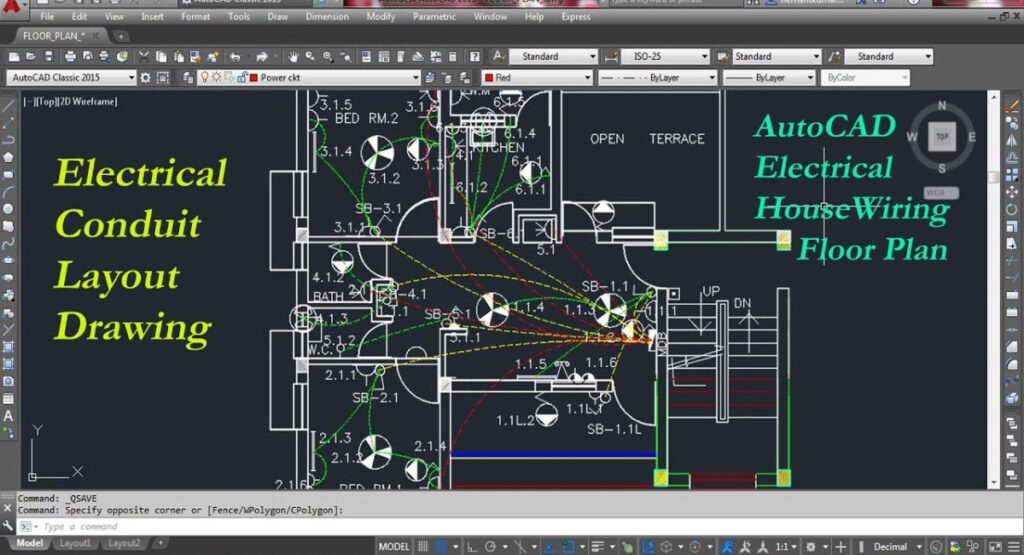
Despite the advancements in technology, electrical layout design remains a challenging field. The primary difficulty lies in the complexity of modern buildings.
Today’s structures are packed with high-tech systems. These include HVAC, plumbing, data cabling, and fire suppression. All of these systems must coexist in the same tight spaces.
Designing an electrical layout that does not interfere with a massive ventilation duct or a structural beam is a complex puzzle. Furthermore, construction environments are often chaotic.
They are dirty, loud, and constantly changing. A layout marked today might be covered by dust or moved by other equipment tomorrow. Traditional marking methods like chalk or ink often fade or get smudged.
Another challenge is the shortage of skilled labor. As more experienced engineers and layout specialists retire, there is a growing gap in the workforce.
Training new workers to perform high-precision manual layouts takes years. Many young professionals are looking for roles that involve working with cutting-edge technology rather than manual tools.
Robotics addresses these challenges by providing a consistent and tech-forward solution. Robotic systems use specialized inks that are more resistant to the harsh conditions of a construction site.
Overcoming Complexity with Model Interpretability
As we integrate more AI and robotics into engineering, we encounter a new challenge. We must understand how these machines make decisions. This is where the concept of model interpretability techniques becomes vital.
In robotics, model interpretability refers to the ability of humans to understand and trust the internal logic of an automated system. If a robot decides to change its path on a construction site, the operator needs to know why.
Was there an obstacle? Was there a change in the digital map? Without interpretability, a robotic system is a black box. If something goes wrong, it is difficult to diagnose the issue.
By using interpretability techniques, engineers can peek inside the brain of the robot. This ensures its logic aligns with safety standards and project goals.
This is particularly important in electrical engineering where safety is paramount. We need to be 100 percent certain that the robot is marking the correct locations for high-voltage components. Interpretability builds the trust necessary for wide-scale adoption of robotics.
The Technical Side: What is a Heap in Robotics?
To understand how robots navigate and process information, we look at the underlying computer science. One common question among students is: what is a heap?
In the context of the software that runs a robot, a heap is a specialized tree-based data structure. It is used to manage memory and prioritize tasks.
For a robot navigating a busy construction site, priority is everything. The robot must constantly decide which sensor input is most important.
Is it the GPS signal? The laser scanner detecting a nearby worker? Or the internal map data? A priority queue, often implemented using a heap, allows the robot to quickly access the most urgent information.
This data structure helps the robot stay organized. It ensures that the most critical functions, like stopping if an obstacle is detected, always happen before less critical functions like updating a status log.
Performance and Analytics Cookies
Many modern robotic systems are connected to the cloud. This allows companies to track the performance of their fleet across multiple job sites.
When you interact with the software interfaces for these robots, you may encounter terms like performance and analytics cookies. In a web or app-based control panel, these cookies serve a practical purpose.
They gather data on how the software is being used. They show which features are most popular and where users might be running into trouble.
For a robotics company, this data is gold. It allows them to refine the user interface. This makes it easier for engineers to upload blueprints or monitor the robot’s progress.
It also helps in identifying bugs or lag in the system. This ensures that the software remains as fast and reliable as the hardware it controls.
While cookies might sound like something purely for websites, they are part of a larger ecosystem of data in Industrial IoT. This data keeps robotic systems running smoothly and efficiently.
Common Questions About Robotics

What are the main components of a robotic layout system?
A typical robotic system for engineering layouts consists of a mobile platform and a high-precision positioning sensor. It also includes an onboard computer for processing blueprints and a marking mechanism that prints the layout on the surface.
How does a robot know where it is on a construction site?
Most layout robots use a combination of LIDAR and SLAM technology. This allows the robot to triangulate its exact position relative to the building’s structural points with incredible accuracy.
Is robotics too expensive for small engineering firms?
The initial investment can be significant. However, the return on investment comes from the massive reduction in rework and labor hours. Many firms find that the robot pays for itself by preventing just one or two major layout errors.
What is the role of model interpretability in these robots?
Model interpretability allows engineers to verify why a robot chose a specific path. It acts as a safety check to ensure the autonomous system is following the engineering logic correctly.
Layout Method Comparison Table
| Feature | Traditional Manual Layout | Robotic Layout Solution |
| Speed | Slow and manual | Up to 5x faster |
| Accuracy | Subject to human error | Sub-millimeter precision |
| Labor Requirement | 2 to 3 people | 1 operator |
| Data Integration | Paper blueprints | Direct CAD/BIM import |
| Consistency | Varies by fatigue | Constant 24/7 |
Practical Takeaways for Adopting Robotics
If you are an engineer or a project manager looking to integrate robotics into your workflow, here are a few actionable steps.
Start with a pilot program. Don’t try to automate your entire operation overnight. Pick one specific task like floor layout and test a robotic solution on a single project.
Focus on data cleanliness. Robotics are only as good as the data you give them. Ensure your digital blueprints are accurate and up-to-date before feeding them into a robotic system.
Invest in training. Your team does not need to become robot programmers. However, they do need to understand how to operate and work alongside these machines.
Always establish clear safety protocols for human-robot interaction on the job site
.Conclusion
Robotics is no longer a future technology. It is a present-day solution that is solving real-world problems in electrical engineering.
By increasing accuracy and boosting speed, robotic systems are helping us build a more efficient world. Whether it is through the use of data structures like heaps or the application of interpretability, this field is evolving fast.
As we continue to push the boundaries, the goal remains the same. We want to create systems that are smarter, safer, and more precise than anything we have seen before.
1 thought on “Robotics in Engineering: The 2026 Guide (For Professionals)”