

Technology is often viewed as a product of the modern world. We think of sleek robots, advanced AI, and complex automation systems. However, the roots of technology stretch back thousands of years. Long before the first silicon chip, ancient civilizations were developing sophisticated “technologies” of preservation, chemistry, and biological engineering.
One of the most striking examples of this is mummification. While it may seem purely religious or macabre, mummification was actually an early form of applied science. It required a deep understanding of chemical reactions, anatomy, and environmental control.
Today, we look back at these ancient methods not just with curiosity, but with the help of modern robotics and imaging tools. These technologies allow us to “unwrap” the past without damaging fragile artifacts. In this article, we will explore the fascinating intersection of ancient preservation and the bizarre ways these “relics” were repurposed in later centuries.
That’s a Wrap: Methods of Mummification
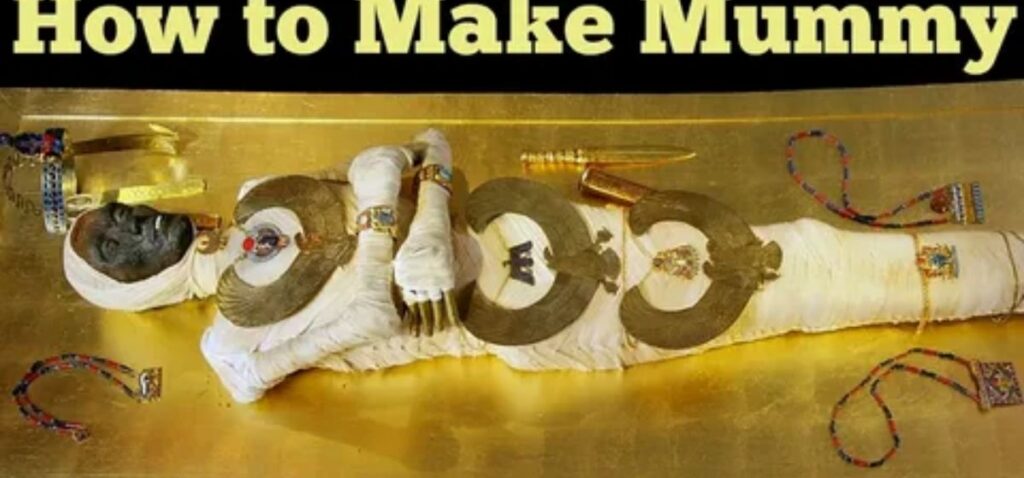
Mummification was far from a simple ritual. It was a rigorous technical process that evolved over centuries. The goal was to halt the natural biological decay of the human body, a feat that requires precise control over moisture and bacteria.
The most famous method used by the ancient Egyptians involved several key steps. First, the internal organs were removed. This was a critical “technical” requirement because the organs contain high amounts of water, which accelerates rot. Interestingly, the brain was often removed through the nose using a metal hook, a specialized tool of the era.
After the organs were removed, the body was treated with natron. Natron is a naturally occurring salt found in Egypt. This substance acted as a powerful desiccant. By covering the body in natron for about 40 days, the Egyptians effectively “automated” the dehydration process.
Once the moisture was gone, the body became a stable biological artifact. The final stage involved wrapping the body in hundreds of yards of linen. Between these layers, they applied resins and oils. These substances acted as sealants, preventing environmental humidity from re-entering the tissues.
Today, we use similar principles in modern food preservation and even in the storage of sensitive robotic components. Protecting a system from oxidation and moisture is a timeless engineering challenge.
As Fake Religious Relics
As the centuries passed, the original purpose of mummies was often forgotten, and they became objects of intense commercial value. During the Middle Ages and the Renaissance, a strange “technology of deception” emerged: the creation of fake mummies.
Europe was gripped by “mummy mania.” People wanted a piece of the ancient world, whether for spiritual reasons or as status symbols. Because the supply of authentic Egyptian mummies was limited, a thriving industry of forgeries began.
Forgers would take the bodies of recently deceased individuals, dry them in ovens, and treat them with bitumen or asphalt to give them an “ancient” appearance. These fake relics were then sold to churches, collectors, and even royal courts.
It wasn’t until the advent of modern X-ray technology and CT scanning that many of these fakes were finally exposed. For example, some “child mummies” in prestigious museum collections were found to be nothing more than a bundle of rags and animal bones. This highlights how modern technology acts as a tool for truth, peeling back layers of historical fraud.
As Medicine
Perhaps the most shocking use of mummies in history was their role in the medical field. From the 12th to the 17th centuries, ground-up mummy powder was a standard ingredient in European pharmacies. It was known as “mumia.”
The reason for this was a linguistic misunderstanding. Early doctors believed that mummies were preserved with bitumen, a substance from the Dead Sea that was prized for its medicinal properties. They thought that by consuming the mummy, they were consuming this healing bitumen.
Mummy powder was prescribed for a wide range of ailments, including:
- Bone fractures and bruises
- Epilepsy and migraines
- Stomach ulcers and coughs
In an era before clinical trials and modern chemistry, this was considered cutting-edge medicine. However, as the demand grew, the “technology” of production shifted from finding ancient mummies to creating “fresh” ones.
Eventually, the practice faded as scientific understanding improved. We learned that the “healing power” was a myth. This serves as a reminder that technology and medicine must always be grounded in verified data rather than superstition.
As Fuel for Locomotives
One of the most persistent urban legends in the history of technology is the idea that mummies were used to fuel steam engines. During the 19th-century expansion of railroads in Egypt, some reports claimed that mummies were burned in place of coal.
The famous author Mark Twain even wrote about this in his travelogue, The Innocents Abroad. He joked that the railway engineers preferred mummies because they burned well due to the resins and oils used in their preservation. He even quipped that “King Tut” might make a better fuel than a commoner.
While there is little historical evidence to prove this happened on a mass scale, the story highlights the 19th-century view of mummies as “material” rather than people. In the eyes of industrial-era entrepreneurs, the ancient dead were simply another resource to be exploited by new technology.
As Fertilizer
While the fuel stories might be exaggerated, the use of mummies as fertilizer is a documented fact. In the late 1800s, millions of mummified cats were discovered in huge pits in Egypt. To the local farmers and international traders, these weren’t sacred offerings—they were a source of nitrogen.
In 1888, a single shipment of 180,000 mummified cats was sent from Egypt to Liverpool, England. Upon arrival, they were crushed into powder and spread across the fields as fertilizer.
This was a primitive form of “bio-technology.” People recognized that the organic matter, even if it was thousands of years old, could help crops grow. It is a stark contrast to how we treat archaeological finds today. Modern technology allows us to study these animal mummies using non-invasive scans, preserving their history while still learning from their biology.
Conclusion
The history of technology is not just a straight line toward the future. It is a winding path that includes ancient chemical preservation, the rise of industrial-scale recycling, and the modern era of robotic imaging.
By understanding how ancient civilizations used their “technology” to preserve life, and how later generations used their “technology” to repurpose it, we gain a deeper appreciation for the tools we have today. We no longer need to destroy the past to learn from it. Instead, we use digital tools to preserve it forever

1 thought on “Technology and the Ancient Secrets of Mummification”